How To Become More Self-Sufficient Without Starting a Full-Blown Farm…
Want to start preserving your harvest, making your own soap, or building a backyard root cellar — but not sure where to begin? “Homesteading Advice” gives you instant lifetime access to 35+ practical homesteading books on food preservation, veggie gardening, DIY natural cleaning products (save over $250 per year with this skill alone), brewing, off-grid energy, and a whole lot more…
Click Here To Check It Out Now!
Beekeeping is a great hobby, whether you keep bees for pollination, honey, profit, medicinal uses or all of the above.
But getting started with bees can be expensive if you use conventional hives.
A basic setup with bees can cost more than $200, and building conventional hives and frames is time-consuming.
But there’s a simpler, less-expensive and more natural option: top-bar hives. The top-bar method of beekeeping allows you to make simpler, inexpensive hives. Build them now and you can start keeping bees next spring.
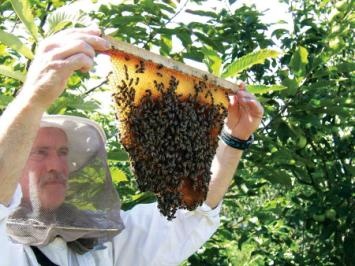
In the top-bar system, you build simple box hives with slats (bars) of wood laid across the top, to which the bees attach their wax comb…
