How To Become More Self-Sufficient Without Starting a Full-Blown Farm…
Want to start preserving your harvest, making your own soap, or building a backyard root cellar — but not sure where to begin? “Homesteading Advice” gives you instant lifetime access to 35+ practical homesteading books on food preservation, veggie gardening, DIY natural cleaning products (save over $250 per year with this skill alone), brewing, off-grid energy, and a whole lot more…
Click Here To Check It Out Now!
“Imagine if all of the animals throughout the entire state of Connecticut left or died.
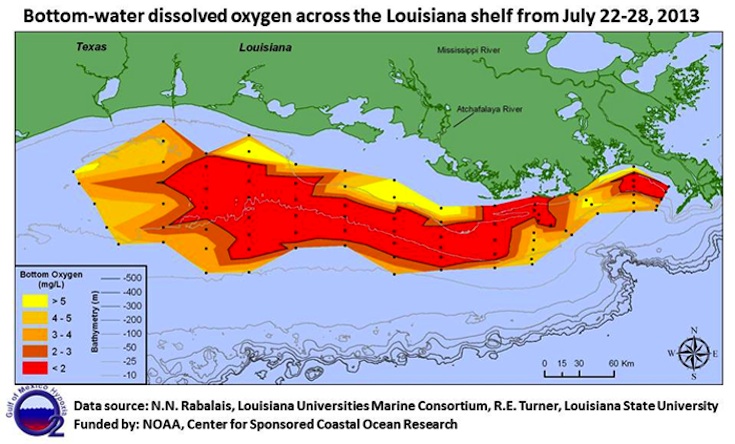
This is what happens every year in the Gulf of Mexico.
The size of the dead zone varies—sometimes it’s as big as New Jersey or only the size of Rhode Island, but the problem always persists.
Researchers from the Louisiana Universities Marine Consortium just spent a week measuring dissolved oxygen concentrations off the coasts of Louisiana and Texas to determine how big the dead zone is this year. And they found that it is about 5,800 square miles, or roughly, the size of the state of Connecticut.
This area is called “the dead zone” because dissolved oxygen levels are too low to support life. Animals that can move out of the area, like fish and shrimp, will leave, and animals that can’t, like brittle stars and mussels, will become stressed and eventually die…”
